
Lice Infestation: The Definitive Parent’s Checklist for Detection and Safe Removal in 2026
It is 8:45 PM on a school night when you spot that telltale crawl near your child’s neckline. Your heart sinks, your skin starts to itch, and your first instinct is to bag up every stuffed animal in the house while rushing to the nearest pharmacy. You aren’t alone. The CDC reports that between 6 million and 12 million children aged 3 to 11 face a lice infestation every year in the United States. It’s an overwhelming moment that often comes with a side of social stigma and exhaustion, especially if you’ve already spent a fortune on over the counter treatments that simply didn’t work. Read on about Lice Infestation: The Definitive Parent’s Checklist for Detection and Safe Removal in 2026
We completely understand that "grossed out" feeling and the desperate need for a good night’s sleep. Don’t panic. We are here to transform your stress into a solid plan with our expert-backed guide to identifying and eradicating head lice without using toxic chemicals. This checklist covers everything from distinguishing nits from common dandruff to our proven "one and done" removal method. You’re about to trade your confusion for confidence and get your family back to being bug-free.
Key Takeaways
-
Understand why a lice infestation is simply about head-to-head contact, helping you ditch the "dirty house" stigma once and for all.
-
Learn to spot the signs like a pro by focusing on specific "hot spots" and using the right tools for a stress-free check.
-
Find out why most over-the-counter kits leave you frustrated and how to effectively beat resistant "super lice" without the panic.
-
Get the step-by-step on our non-toxic removal method that prioritizes your child’s safety and hair health over harsh pesticides.
-
Simplify your cleanup with the 48-hour rule so you can focus on your family instead of scrubbing every inch of your home.
Table of Contents
What is a Lice Infestation? Separating Fact from Friction
Take a deep breath. If you just found a bug in your child’s hair, your heart is probably racing and you might feel a sudden urge to scrub every surface in your home. We’ve been there, and we’re here to tell you: it’s going to be okay. A Head lice infestation is simply the presence of live nymphs or adult lice on the human scalp. It’s a common childhood hurdle, not a reflection of your parenting or your vacuuming habits.
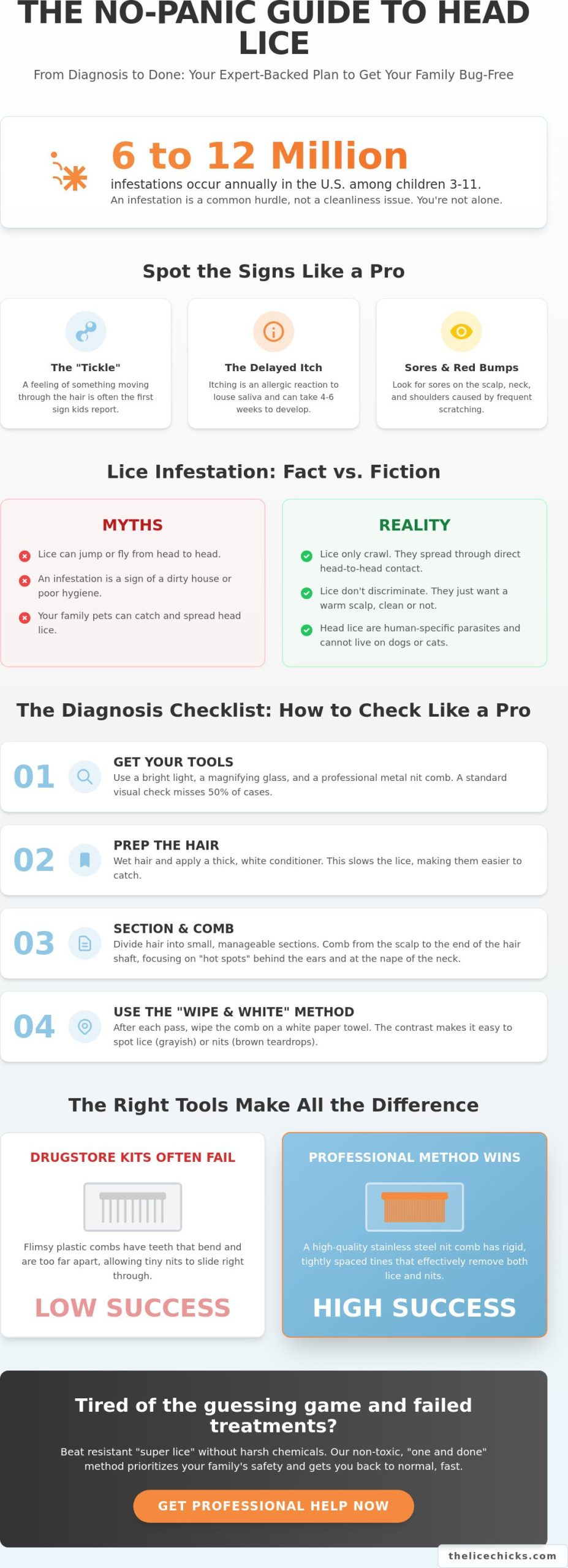
Our "Don’t Panic" mantra is the most important tool in your kit. Panic leads to expensive, unnecessary chemical treatments and late-night laundry marathons that don’t actually solve the problem. Understanding the scale helps lower the stress. Data from the CDC shows that an estimated 6 to 12 million infestations occur annually in the U.S. among children aged 3 to 11. You aren’t alone; you’re just part of a very large, temporarily itchy club.
A lice infestation happens because of direct head-to-head contact. These tiny travelers move from one person to another during playdates, sleepovers, or even a quick group photo. They don’t care about personal hygiene or how often you scrub your kitchen floors. They just want a warm scalp and a meal. It’s a biological occurrence, not a cleanliness issue.
Common Symptoms to Watch For
Detecting these pests early makes removal much easier and prevents a larger lice infestation within the family. Keep an eye out for these specific signs:
-
The Tickle: Children often describe a "tickling" sensation or the feeling of something moving through their hair.
-
The Delayed Itch: Itching is actually an allergic reaction to louse saliva. This reaction can take 4 to 6 weeks to develop after the bugs first arrive.
-
Sores and Red Bumps: Look for small red bumps or crusty sores on the scalp, neck, and shoulders caused by frequent scratching.
Lice Infestation Myths vs. Reality
Misinformation is often more contagious than the bugs themselves. Let’s clear up the most common misconceptions we hear from parents. First, lice don’t have wings and they don’t have spring-loaded legs. They can’t jump or fly; they only crawl. Second, your pets are completely safe. Head lice are human-specific parasites, meaning they can’t live on your dog or cat. If you want to learn more about exactly how these bugs travel, read our detailed breakdown on how do you get lice to understand transmission risks.
The Lice Infestation Diagnosis Checklist: How to Check Like a Pro
First, take a deep breath. We know that finding a potential bug is a high-stress moment, but you’ve got this. To catch a lice infestation early, you need more than just a quick glance under the bathroom light. A standard visual check misses about 50 percent of active cases because these critters are fast and light-avoidant. You need a high-powered lamp or direct sunlight to see what’s really going on near the scalp. Focus your search on the "hot spots" where lice love to hide: the warm areas behind the ears and at the nape of the neck.
Understanding what you are looking for is half the battle. Many parents mistake "DEC plugs," which are harmless oil droplets, or dandruff for nits. Here is the trick: nits are glued to the hair shaft and won’t budge with a simple flick of the finger. If the debris flakes off easily, it isn’t lice. For more clarity on what to look for, you can review the Mayo Clinic on lice symptoms to distinguish between a dry scalp and a true lice infestation. Don’t panic; once you identify the issue, we can move toward a solution together.
Step-by-Step Screening Protocol
Wet the hair thoroughly and apply a generous amount of high-quality conditioner. This doesn’t kill the bugs, but it slows them down so they can’t run away from your comb. Divide the hair into four manageable quadrants using clips to ensure you don’t miss a single strand. Use the "wipe and white" method by pulling the comb from the scalp to the ends and wiping the debris onto a white paper towel. This contrast makes it much easier to spot the brownish, teardrop-shaped eggs or the grayish nymphs that might otherwise stay hidden.
Essential Tools for Your Home Check
Your tools determine your success rate. A professional nit comb with tight, stainless steel tines is far superior to the flimsy plastic versions found in drugstore kits. Plastic teeth often bend, allowing tiny nits to slide right through the gaps. We also recommend using a magnifying glass or a specialized "lice light" to help identify translucent eggs that blend into lighter hair colors. If you are still unsure after your check, we offer a virtual lice check to give you the professional second opinion you need to sleep soundly. This simple step ensures you aren’t treating a problem that isn’t there or missing one that is.
Why Traditional Lice Treatments Often Fail in 2026
If you’ve spent the last three nights scrubbing your child’s scalp only to find another bug this morning, take a deep breath. You aren’t doing anything wrong. Dealing with a lice infestation in 2026 is a different battle than the one our parents fought. The reality is that the old-school boxes on drugstore shelves haven’t kept up with biology. Most over-the-counter kits rely on pyrethroids, which are pesticides designed to attack the nervous system of the louse. Unfortunately, lice have spent the last few decades getting much smarter and tougher.
This has created what we call the ‘Nit Gap.’ While a chemical might kill some of the live crawling bugs, it almost never penetrates the protective, glue-like shell of the egg. You wash the hair, think you’re clear, and then a fresh batch of nymphs hatches seven days later. This cycle creates a ‘one and done’ myth that is more about marketing than actual science. To truly end a lice infestation, you have to address the eggs, not just the adults.
We also want to remind you to skip the ‘kitchen cabinet’ cures you see on social media. Mayonnaise is just a greasy mess that doesn’t work, and kerosene is flat-out dangerous. Your child’s safety is the priority, and these home remedies often cause more harm than the bugs themselves.
The Problem with Neurotoxic Pesticides
Putting harsh chemicals on a child’s sensitive scalp is a gamble that rarely pays off. These neurotoxins frequently cause scalp irritation, redness, and intense itching that parents mistake for more lice. When these treatments fail, many parents apply them a second or third time in desperation. This repeated exposure only increases skin sensitivity without solving the root cause. Super Lice are a strain of head lice that has evolved genetic resistance to pyrethroids, making these chemical attacks essentially useless.
The Importance of Manual Removal
At The Lice Chicks, we know that terminating the life cycle requires a hands-on approach. Physical removal is the only way to ensure every single egg is gone. Our philosophy is simple: if you miss one nit, you haven’t finished the job. It takes a specialized comb and a bit of patience, but it’s the only 100% effective way to stop the cycle without using toxins. Choosing the best professional nit comb for stress-free lice removal is a critical first step before you begin. You can follow our professional guide on how to get rid of lice to see the exact process we use to help families find peace of mind. Don’t panic; we are here to help you through every strand.
The Non-Toxic Removal & Prevention Strategy
Don’t panic. If you’ve discovered a lice infestation, take a deep breath and know that we’ve got your back. At The Lice Chicks, we use a specialized removal process that prioritizes your child’s safety and your peace of mind. Our method relies on high-quality conditioning agents rather than harsh, pesticide-laden shampoos. These conditioners serve a dual purpose; they stun the lice and lubricate the hair shaft, allowing a professional-grade comb to glide through and capture every nit and nymph without causing hair breakage or scalp irritation.
Consistency is the secret to a successful recovery. We recommend a strict follow-up schedule to ensure the life cycle is completely broken. You should perform a thorough check on days 1, 4, 7, and 10 after the initial treatment. This 10-day window is critical because it accounts for any eggs that might have been laid just before your first cleaning. By sticking to this timeline, you ensure that no new hatchlings have the chance to mature and start the cycle over again.
Natural Prevention That Actually Works
Prevention is a science, not a guessing game. Lice find their next hosts through scent, and they happen to be very picky. Research into essential oils shows that scents like peppermint and rosemary act as natural deterrents, essentially making your child’s head "invisible" to a louse looking for a new home. Incorporating a lice prevention spray into your morning routine creates a scent-based shield that lasts throughout the school day.
Styling also plays a massive role in your defense strategy. We advocate for the "Hair Up" rule. By keeping long hair in tight braids, buns, or ponytails, you reduce the surface area available for lice to grab onto. This simple habit can reduce the risk of a lice infestation by as much as 90%. When hair is contained, there’s less "flyaway" opportunity for head-to-head contact during recess or group projects.
The Prevention Bundle: Your Home Defense Kit
Building a "Lice Defense" routine doesn’t have to be a chore. It’s much easier to maintain a clean head than it is to clear an active one. In fact, professional data suggests that consistent prevention is 10x easier than removal. Your home should be equipped with a lice prevention bundle of products to keep the whole family safe.
-
Prevention Shampoo: Use this twice a week to keep the scalp environment unfavorable for lice.
-
Prevention Conditioner: This keeps the hair slick and scented, making it difficult for nits to attach.
-
Daily Defense Spray: A quick spritz before the bus arrives provides an extra layer of protection.
By treating these products like regular toiletries, you strip away the stigma and replace it with a proactive, healthy habit. You’ll sleep better knowing your "defense shield" is active. If you want to ensure your family is fully protected for the upcoming school year, explore our full range of non-toxic solutions today.
Life After Lice: The Sanity-Saving Cleaning Checklist
Take a deep breath and put down the bleach. Your house isn’t "infested," and you certainly don’t need to bag up every toy your child owns. Understanding the 48-hour rule will save your sanity and your weekend. Head lice are biological parasites that require human blood and body heat to survive. Once they lose their host, they dehydrate and die within 48 hours. This means you don’t need to scrub the baseboards or steam the curtains. Focus your efforts only on items that had direct head contact in the 48 hours before you discovered the lice infestation.
Avoid "lice bombs" and pesticide sprays at all costs. These aerosol chemicals are often ineffective against nits and introduce unnecessary toxins into your home’s air supply. We prioritize a safe, non-toxic environment for your family. When you make the "Lice Call" to the school or a neighbor, remember that you are being a hero, not a pariah. Roughly 6 million to 12 million children between the ages of 3 and 11 experience a lice infestation every year. Sharing the news helps break the cycle of re-infestation and keeps the whole community itch-free.
Focus Your Energy Where It Matters
High heat is your most powerful ally in this process. Toss bedding, pillowcases, and recently worn hoodies into the dryer on high heat for 30 minutes. This duration is scientifically proven to kill any stray lice or viable eggs through desiccation. For delicate items or mountains of stuffed animals, a simple 48-hour "time out" in a sealed bag is sufficient. Your vacuum is your best friend for car seats and upholstered couches. A quick pass with the attachment is all it takes to remove stray hairs that might be carrying a hitchhiker.
When to Call in the Experts
If the thought of one more load of laundry makes you want to cry, it might be time to call in the professionals. Busy families often benefit from in-home services that handle the meticulous combing with expert precision. We also provide virtual checks to help you identify "louse-like" debris. This service can save you three hours of unnecessary combing by confirming if a speck is a nit or just common hair debris. Getting that expert stamp of approval provides the peace of mind you need to finally get a good night’s sleep. Don’t panic; we are your partners in getting life back to normal.
Take Back Your Peace of Mind Today
Discovering a lice infestation might feel like a domestic crisis, but it’s just a temporary glitch in your schedule. You now have the professional checklist needed to spot nits accurately and avoid the trap of ineffective, chemical-heavy treatments. By focusing on non-toxic removal and a targeted cleaning strategy, you can skip the panic and keep your family safe. Precision and patience are your best tools for a "one and done" result.
Since 2016, The Lice Chicks have helped thousands of families regain their sanity with our 100% non-toxic, pesticide-free removal process. Our expert technicians come directly to your home, bringing clinical authority and a supportive hand to your front door. We’ve seen it all, and we’re ready to handle the picking for you. Take a deep breath; the hard part is already over.
Don’t Panic, Get Expert In-Home Lice Removal or a Virtual Check Today!
Frequently Asked Questions
How can I tell if a lice infestation is active or old?
You can tell an infestation is active if you find live, moving bugs or eggs located within 0.25 inches of the scalp. If the nits are further down the hair shaft, they’re likely empty shells from an old case. We use the 0.25 inch rule because lice need the warmth of the skin to survive. Anything found 1 inch away is definitely a relic of the past. Don’t panic; we can help you clear it regardless.
Is it possible to have lice with no itching at all?
Yes, it’s very common to have no itching at all. Research from the American Academy of Pediatrics shows that 50% of children with a lice infestation never experience the classic itchy head symptom. Itching is actually an allergic reaction to louse saliva, and it can take 4 to 6 weeks for a person to become sensitized and start scratching. We recommend regular weekly checks to catch things early since your child might not feel a thing.
Can lice live on pillows, carpets, or hats for a long time?
No, lice cannot survive on household items for more than a couple of days. A head louse will die within 24 to 48 hours if it falls off a human host because it loses its food source and warmth. They don’t have feet designed for hopping or crawling on carpets. We recommend a quick 15 minute dryer cycle for favorite pillows or hats, but deep cleaning your entire home is unnecessary. Focus on the head, not the house.
What do lice eggs (nits) look like compared to dandruff?
Nits are oval shaped and glued firmly to one side of the hair shaft, while dandruff is irregular and slides off easily. If you can blow it away or flick it with your finger, it’s just dry skin or hair product. Nits require a specialized fine tooth comb or a firm pinch with your fingernails to move. They’re usually teardrop shaped and about 0.8 millimeters long. Our Chicks are experts at spotting the difference in seconds.
How many times do I need to comb to be sure the lice are gone?
We recommend two thorough comb-outs spaced 7 days apart to be 100% certain. The first session removes all live bugs and existing nits, while the second session catches any microscopic eggs that might have been missed before they can lay new eggs. Our one and done professional treatment often eliminates the need for repeated home sessions, but a follow up check at day 7 provides total peace of mind. Consistency is key to staying lice-free.
What is the fastest way to get rid of a lice infestation safely?
The fastest way to safely clear a lice infestation is manual removal using a high quality metal nit comb and a non-toxic, enzyme based lubricant. Chemical shampoos often fail because 98% of lice have developed genetic resistance to common over the counter pesticides. We focus on a physical one and done approach that removes every egg, ensuring the cycle is broken immediately without using harsh, scary toxins on your child’s scalp. It’s safe and effective.
Should I treat everyone in the house if only one person has lice?
You should check everyone in the house, but only treat those with a confirmed presence of live lice or nits. Statistics show there is an 80% chance of transmission between siblings who share a bed or play closely. We suggest a peek and see approach for the whole family. If one person is clear, don’t waste time or product on unnecessary treatments; just keep an eye on them for 10 days to be safe.
Can I get a lice infestation from a swimming pool?
It’s nearly impossible to catch lice from a swimming pool. Lice go into a state of suspended animation underwater and grip the hair shaft with incredible strength to stay attached to their host. While they can survive submerged for 4 to 6 hours, they don’t swim through the water to find a new head. Transmission almost always happens through direct head to head contact during poolside play or sharing towels. Keep swimming; just don’t share the goggles.