
How to Remove Nits Permanently: The Ultimate Parent’s Guide for 2026

What if the expensive drugstore kit you just bought is actually the reason you are still spotting tiny white specks in your child’s hair three weeks later? It is a heavy burden to carry, especially when 75% of parents reported that over-the-counter treatments failed to stop a re-infestation in 2025. You probably feel frustrated, exhausted, and perhaps a little bit guilty that you cannot seem to shake these uninvited guests. We want you to take a deep breath and remember our favorite mantra: Don’t Panic. You aren’t doing anything wrong; you have just been given the wrong tools. Read on How to Remove Nits Permanently: The Ultimate Parent’s Guide for 2026
We are here to help you master professional nit removal using our proven, non-toxic approach that prioritizes your child’s safety and your peace of mind. By the time you finish this guide, you will have the confidence to clear your household and end the cycle for good. We are going to walk you through the difference between dandruff and nits, the secrets of the "one and done" combing method, and how to maintain a lice-free home without ever touching a harsh chemical again.
Key Takeaways
-
Discover why that stubborn protein ‘glue’ makes nits so tricky and how to identify them correctly before they have a chance to hatch.
-
Master our gold-standard wet combing technique for effective nit removal using simple, non-toxic supplies and expert precision.
-
Stop the cycle of re-infestation by learning why most drugstore kits fail to kill eggs and why physical removal is your best defense.
-
Take a deep breath and skip the house-cleaning panic with the facts on why lice live on heads, not in your home.
-
Identify when it’s time to call in your expert allies for a ‘one and done’ professional solution that restores your peace of mind instantly.
Table of Contents
-
Step-by-Step Guide: The Professional Way to Remove Nits Permanently
-
Pesticides vs. Physical Removal: Why Traditional Kits Often Fail
What Are Nits and Why Is Permanent Removal So Difficult?
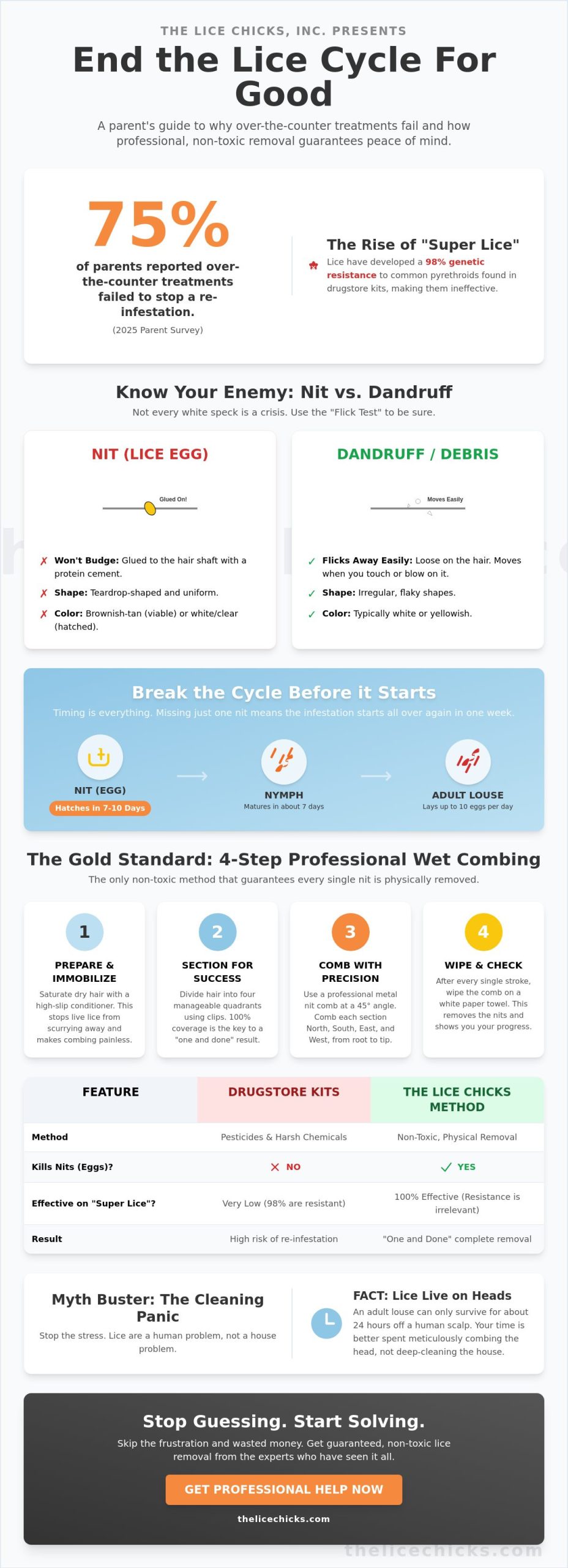
First things first: Don’t Panic. You just found a tiny speck in your child’s hair, and your heart is racing. We’ve been there, and we promise you’re going to get through this. To win the battle, you have to know your enemy. Nits are the eggs laid by adult head lice. They aren’t the crawling bugs themselves, but they’re the reason infestations feel impossible to stop. While a nymph (baby louse) or an adult louse moves around the scalp, a nit stays perfectly still. It’s attached to the hair shaft with a specialized protein-based cement that’s effectively stronger than superglue. For a comprehensive overview of the head louse and its biological habits, research shows these eggs are laid within 1 centimeter of the scalp to stay warm and hydrated.
Why is nit removal so frustrating for parents? It’s a high-stakes numbers game. A single female louse can lay up to 10 eggs every day of her life. If you miss just one viable nit during your cleanup, it will hatch in about a week. That one survivor starts the entire cycle over again. This is why The Lice Chicks focus on a "one and done" strategy. We don’t just want the bugs; we want every single egg gone so your family can finally sleep soundly. Our goal is to move you from panic to a concrete plan of action in record time.
Nits vs. Dandruff: How to Tell the Difference
Not every white speck is a cause for a domestic crisis. We use the "flick test" to save parents from unnecessary gray hairs. Try to flick the speck with your finger or a comb. If it moves easily or blows away, it’s just dandruff, dry skin, or hair product. Nits are stubborn. They are teardrop-shaped and glued firmly at an angle to the hair. Live nits usually look brownish-tan, while hatched or dead ones appear white or clear. You can see more side-by-side comparisons in our guide on Dandruff vs. Lice Nits.
The Lifecycle: Why Timing Matters for Permanent Removal
Timing is everything when you’re aiming for a lice-free home in 2026. A nit typically has a 7 to 10 day incubation period before it hatches into a nymph. To achieve permanent nit removal, you have to break this cycle before the next generation can lay eggs of their own. The "Super Lice" era is defined as a period where lice have developed a 98% genetic resistance to common over-the-counter pyrethroids. Because these old-school chemical treatments don’t kill the eggs, manual removal is your most reliable path to success. We use professional-grade combs and a little bit of patience to ensure nothing is left behind to hatch later. It’s a meticulous process, but it’s the only way to guarantee your "one and done" victory.
Step-by-Step Guide: The Professional Way to Remove Nits Permanently
First, take a deep breath. We’ve helped thousands of families navigate this since 2016 and we know exactly how you feel. Wet combing is the gold standard for nit removal because it is non-toxic, safe, and incredibly effective. Unlike chemical treatments that might miss a few eggs, this manual method ensures you’re physically clearing the hair. You’ll need a professional-grade nit comb with tight metal tines, a high-slip conditioner, and the brightest lighting in your home. We often recommend a headlamp to keep your hands free and the "hot spots" visible.
Preparation: Creating the Perfect ‘Slip’
Dry hair combing is a recipe for tears and frustration. It’s painful for the child and allows live lice to scurry away from the comb. Conditioner serves two vital purposes: it immobilizes the lice and provides a "slip" that lets the comb glide through tangles without breaking the hair. Using a specialized product like Lice Chicks Conditioner ensures the hair stays lubricated throughout the entire process. While the FDA approval of Ivermectin lotion offers a modern non-pesticide option for families, physical removal remains the most reliable way to achieve a "one and done" result without leaving anything to chance.
The Combing Technique: Angles and Pressure
Section the hair into four quadrants using clips. This organization is vital for 100% coverage. Hold the comb at a 45-degree angle to the scalp to ensure the tines catch the nits right at the root where they like to hide. We use the "Four-Way" combing method: stroke North, South, East, and West for every single section. Focus heavily on the nape of the neck and behind the ears. After every stroke, use a white paper towel for a "wipe and check." This rhythm allows you to see the evidence of your progress and ensures you aren’t just moving nits around the head. It’s a methodical process, but it’s the only way to be certain.
The Final Inspection: The ‘Nit-Picking’ Phase
The job isn’t finished until you perform a final pass with a magnifying glass. Nits are tiny, teardrop-shaped, and glued tightly to the hair shaft. If you find a stubborn egg that the comb misses, use your fingernails to pinch and slide it all the way off the hair. We stop only when we achieve the "three clean passes" rule. If you can comb through a section three times without seeing a single speck, you’ve successfully mastered nit removal for that area. If you’re feeling a bit cross-eyed after all that work, reach out to us for a professional check to ensure your home is officially lice-free.
Pesticides vs. Physical Removal: Why Traditional Kits Often Fail
You followed the box instructions to a T, spent hours scrubbing the house, and yet, three days later, you see a crawler. It’s the most frustrating phone call we receive, but please, take a deep breath. Don’t Panic. You didn’t fail. The product did. Most drugstore kits rely on neurotoxic pesticides like permethrin to attack the nervous system of the lice. Here is the catch: nits are essentially armored vaults. Because an egg hasn’t developed a nervous system yet, the poison simply slides off the shell. This leaves the eggs perfectly healthy and ready to hatch, starting the cycle all over again.
Beyond the lack of efficacy, many parents are rightly concerned about the health trade-offs. Applying neurotoxins to a child’s scalp can lead to skin irritation or more systemic concerns. Physical nit removal remains the gold standard because bugs cannot develop a biological resistance to a high-quality micro-grooved comb. It’s a mechanical solution to a biological problem. When you remove the egg physically, you remove the possibility of a comeback. It is the only way to ensure the cycle is truly broken.
The Truth About ‘Super Lice’ in 2026
By 2026, data shows that over 98 percent of head lice populations across 48 U.S. states have developed "knockdown resistance" mutations. These bugs aren’t stronger or faster; they’ve simply evolved to survive the old poisons. If you’re curious about why your specific brand didn’t work, you can read more about super lice and why over-the-counter kits fail against drug-resistant head lice. Relying on 1990s chemistry for a 2026 problem is a recipe for a headache you don’t need.
Safe, Non-Toxic Alternatives That Actually Work
We believe in working smarter, not harder. Instead of harsh chemicals, we use enzyme-based products that mimic the natural molting process. These safe, non-toxic formulas help break down the "glue" that holds the nit to the hair shaft, making your nit removal efforts much more effective. While some parents try "suffocation" methods using olive oil or mayonnaise, these are often messy and unreliable. We prefer a cleaner approach:
-
Enzymes: These loosen the bond of the egg without irritating the scalp.
-
Professional Combs: A stainless steel comb catches what the human eye misses.
-
Natural Oils: Peppermint or rosemary can soothe the scalp and provide a fresh scent.
The Lice Chicks philosophy is simple: if it isn’t safe enough for our own kids, it isn’t going on yours. We focus on natural, effective solutions that provide peace of mind without the toxic side effects. You don’t need a lab full of chemicals to get the job done; you just need the right tools and a little bit of patience.
Cleaning the Home: Separating Fact from Fiction
Take a deep breath and put down the bleach. When parents discover an infestation, the first instinct is often to scrub every inch of the house or even consider moving out. We call this the "house cleaning panic," and it is completely unnecessary. Head lice are specialized parasites that require a human host to survive. They don’t live in your carpet, they don’t hide in your floorboards, and they certainly don’t want to live on your dog.
The science of nit removal is much simpler than the myths suggest. Nits are glued to the hair shaft with a cement-like substance. If a nit falls off the hair, it loses its heat source. Without the consistent 98.6 degree temperature of the human scalp, a nit cannot hatch. It simply dies. You don’t need to spend days deep-cleaning your baseboards when that time is better spent on the actual hair.
Forget the old advice about bagging stuffed animals in the garage for two weeks. This "toy jail" is a relic of the 1980s that only serves to stress out your kids. A louse that falls off a head will die within 24 to 48 hours because it lacks a blood meal. If you are worried about a favorite teddy bear, just toss it in the dryer or set it aside for two days. That is all it takes to be 100 percent safe.
Use this 30-minute peace of mind checklist instead of a weekend-long scrub fest:
-
Vacuum the area where the infested person sat or slept in the last 48 hours.
-
Wipe down leather or plastic headrests in the car.
-
Use a lint roller on the couch or high-back chairs.
-
Focus only on items that had direct head contact.
The ‘Hot Laundry’ Rule
You don’t need to wash every piece of clothing in the closet. Focus only on items used in the 48 hours before treatment. This includes pillowcases, bath towels, hats, and that favorite hoodie your teen refuses to take off. The secret weapon isn’t the wash cycle; it’s the heat. Set your dryer to high heat (at least 130 degrees Fahrenheit) for 30 minutes. This temperature effectively kills both lice and any stray nits. For delicate items like silk or dry-clean-only coats, a 48-hour "time out" in a closet away from people is sufficient.
Brushes, Combs, and Hair Accessories
Your hair tools need a quick refresh to ensure total nit removal success. While some suggest the freezer, boiling water is the faster and more reliable method. Soak brushes and plastic hair ties in water heated to at least 130 degrees for 10 minutes. This heat level is a proven kill-step for parasites. Never share brushes during an active outbreak, as this is a primary way lice travel between siblings. For long-term peace of mind, we recommend using a Lice Prevention Spray on all hair tools and hats to keep the "hitchhikers" away for good.
If you feel overwhelmed by the process, remember that we are here to help you get it right the first time. You can book a professional screening or treatment with our expert team today.
When to Call a Professional: Virtual and In-Home Solutions
Sometimes, despite your best efforts with a comb and a flashlight, the math just doesn’t add up. You’ve spent four hours in the bathroom, your back aches, and your child is officially exhausted. We get it. Nit removal is a meticulous, detail-oriented task that requires a level of patience most humans don’t possess on a Tuesday night. If you’re feeling overwhelmed, it’s time to tag in the experts. At The Lice Chicks, we offer a "One and Done" professional service designed to halt the cycle of frustration immediately.
Having a second pair of expert eyes isn’t just about speed; it’s about certainty. Our technicians have seen thousands of cases since our founding, meaning we can spot a camouflaged nit that looks exactly like a strand of hair to the untrained eye. We take the guesswork out of the equation so you can finally sleep without itching your own head in sympathy. Our process is non-toxic, safe, and focused on getting your family back to normal life without the chemical drama of drugstore kits.
The Benefits of In-Home Treatment
There’s no place like home, especially when you’re dealing with a family-wide infestation. Choosing Professional Lice Treatment in the comfort of your own home removes the stress of a public salon. Your kids can watch their favorite show or play with their own toys while we work our magic. This setting also allows our technicians to provide hands-on education. We don’t just clear the hair; we show you exactly how to prevent future cases based on your family’s specific routine. It’s a masterclass in prevention that keeps your home a lice-free zone for the long haul.
Virtual Lice Checks: Expert Eyes Anywhere
Not every itchy situation requires a full house call. Sometimes you just need to know if that tiny white speck is a nit or just a piece of dry skin. Our virtual check option is a game-changer for busy parents. By sending a high-resolution photo to our team, you can get a "Chicks" opinion in minutes. This service has saved families an average of three hours of unnecessary combing by identifying "false alarms" quickly. It’s the ultimate peace-of-mind tool for those moments when you’re staring at a scalp and doubting your own vision.
Don’t let the doubt keep you up at night. Book your Virtual Check or In-Home Service today! and let us handle the heavy lifting. We are here to be your reliable ally, stripping away the stigma and replacing it with a clean, stress-free start. Remember: Don’t Panic. We’ve got this, and soon, you will too.
Get Back to Your Stress-Free Life
Dealing with an infestation is exhausting, but you’ve got the tools to handle it. Remember that physical extraction is the only reliable way to clear hair because 97 percent of lice populations have developed resistance to common drugstore pesticides. Focus your energy on the scalp rather than the sofa. Since lice typically die within 24 hours without a human host, a simple vacuuming of high-traffic areas is all your home needs to stay clear.
If you’re feeling overwhelmed, let us take the burden off your shoulders. The Lice Chicks have spent over 20 years perfecting a 100 percent non-toxic approach that is safe for all ages. Our specialized ‘One and Done’ protocol is designed to end the cycle of nit removal in a single visit, saving you from the frustration of failed DIY attempts. You don’t have to do this alone. Don’t Panic! Get Professional, Non-Toxic Help from The Lice Chicks and let’s get your family back to normal. You’re doing a great job, and relief is just a click away.
Frequently Asked Questions
Can nits hatch after they have been removed from the hair?
No, nits cannot hatch once they’re off the hair. They require the constant 98.6 degree warmth of the human scalp to incubate properly. Once removed, an egg will typically die within 24 hours because it loses its vital heat source. Don’t panic about your furniture or rugs. Focus your energy on the scalp where it matters most to your family’s peace of mind.
How can you tell if a nit is dead or alive?
You can identify a live nit by its color and its specific location on the hair strand. Live eggs are usually tan or coffee colored and sit within 6 millimeters of the scalp. If the speck is white, clear, or further down the hair shaft, it’s likely an empty shell. We always say if it doesn’t "pop" when you squeeze it, the bug has already moved out.
Does hair dye or bleach kill nits?
Hair dye and bleach are not effective solutions for nit removal. While the harsh chemicals might kill some hatched lice, they cannot penetrate the protective glue and hard shell of the egg. A 2018 study showed that the high pH in these products doesn’t stop the hatching cycle. We recommend staying away from these damaging chemicals and sticking to a safe, physical removal method instead.
What happens if you leave one nit in the hair?
Leaving even one viable nit can restart the entire infestation cycle within 7 to 10 days. That single egg hatches into a nymph, matures, and can lay up to 10 new eggs every single day. This is why our "one and done" philosophy is so vital for parents. We use professional grade combs to ensure every single egg is gone so you don’t have to start the process over.
Is it possible to have nits but no live lice?
Yes, it’s very common to find nits without seeing a single crawling louse. This usually happens when the live bugs are hiding or if you’re looking at empty shells from a previous infestation. Research from the American Academy of Pediatrics indicates that 50 percent of children flagged for nits in school screenings don’t actually have an active, living infestation at that moment. We can help you tell the difference.
How long does it take to remove all nits from thick hair?
For a child with thick hair, expect the nit removal process to take between 60 and 90 minutes. We work in very small, 1 inch sections to ensure we don’t miss a single strand of hair. Taking your time during this initial session saves you weeks of frustration later. It’s a focused window of work that brings immediate relief and peace of mind for your entire family.
Should I shave my child’s head to get rid of nits permanently?
Please don’t reach for the clippers because shaving your child’s head is never necessary. We understand the panic, but a buzz cut can be quite traumatic for a little one during an already stressful time. Since lice live on the scalp and not the hair ends, a 100 percent success rate is possible with just a high quality comb and some patience. Let’s keep those beautiful locks intact.
Can I get nits from my dog or cat?
No, you cannot catch head lice from your family pets. These tiny hitchhikers are species specific, meaning human lice only survive on human blood to stay alive. Your dog or cat has a completely different body temperature and hair structure that lice find uninhabitable. You have a 0 percent chance of getting an infestation from your pets, so keep those comforting puppy snuggles coming while we clean the hair.