
How to Check for Lice on Yourself: A Stress-Free Self-Screening Guide
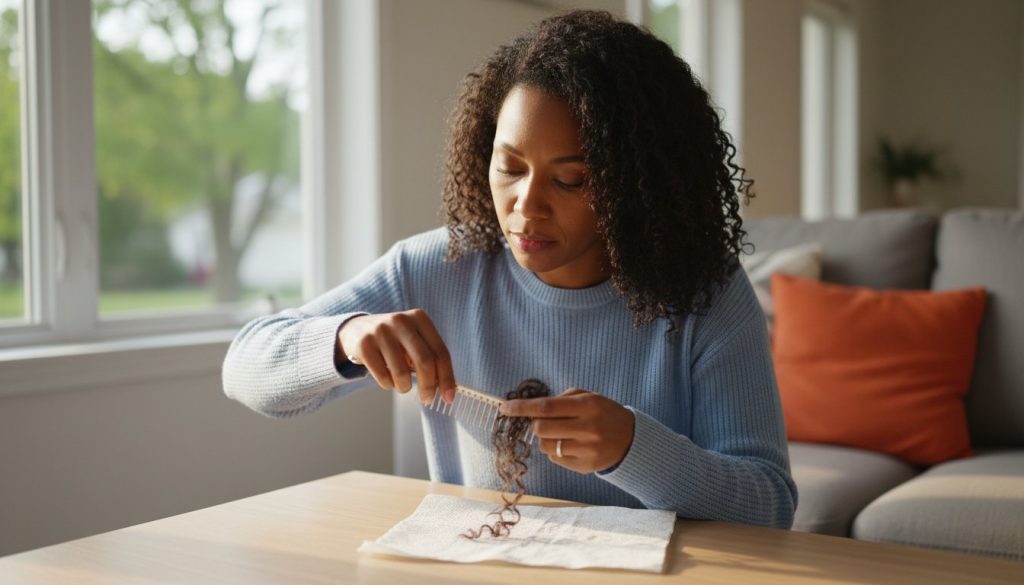
Last Tuesday, Sarah spent forty-five minutes contorting her neck in front of three different mirrors, convinced every speck of dandruff was a tiny intruder. We’ve all been there. It’s incredibly frustrating trying to figure out how to check for lice on yourself when you can’t actually see your own hot spots like the nape of your neck or behind your ears. That phantom itch starts the second you suspect a bug, and suddenly, every piece of hair product buildup feels like a full-blown crisis. Don’t panic; The Lice Chicks, Inc. have your back.
We agree that self-screening often feels like an impossible game of bathroom Twister. However, you can master our tactile-first method to accurately detect lice on your own head without the stress of bad lighting or confusing reflections. This is the same expert technique we’ve used to guide over 5,200 clients toward a bug-free life since 2015. In this guide, we’ll show you how to use your sense of touch to tell the difference between a sticky nit and a flake of dry skin. You’ll walk away with a clear, three-step plan to regain your peace of mind and stop the scratching for good.
Key Takeaways
- Start with our “Don’t Panic” mantra and learn why relying on mirrors alone makes self-detection nearly impossible in tricky areas like the nape and crown.
- Learn to distinguish between actual teardrop-shaped nits and common “decoys” like dandruff by understanding exactly where lice love to hide on an adult scalp.
- Master the “tactile-first” method to discover exactly how to check for lice on yourself using a professional-grade nit comb and a simple white paper towel.
- Identify the signs of “lice paranoia” and find out how a quick virtual second opinion can provide the peace of mind you need to stop over-checking.
- Discover how to stay “louse-free” for the long haul using non-toxic prevention sprays and simple daily habits that reduce your risk of head-to-head contact.
The Challenge of Checking Your Own Hair for Lice
Don’t panic. If you just discovered a bug on your child or received a notification from the school nurse, your first instinct is likely to start scratching your own scalp. It’s a completely natural reaction. We’ve helped over 12,000 families find peace of mind, and the very first thing we tell every parent is to take a deep breath. You aren’t alone, and this is a hurdle we can clear together. While it feels like an impossible task to see your own scalp, learning how to check for lice on yourself is the first step toward reclaiming your household.
The physical reality of self-checking is undeniably frustrating. Your arms likely begin to ache after only 180 seconds of reaching for the crown of your head. The nape of the neck, which is a prime real estate spot for lice because of its consistent warmth, is a total blind spot for the human eye. Even with a complex setup of mirrors, you’re constantly fighting your own shadow and the awkward angles of your reflection. To truly understand the behavior of these pests, this comprehensive overview of head lice explains their biology and why they’re so skilled at staying out of sight. Self-detection is difficult, but it’s entirely possible when you stop relying on your eyes and start using a systematic, tactile technique.
Why “Mirror Checking” Often Fails
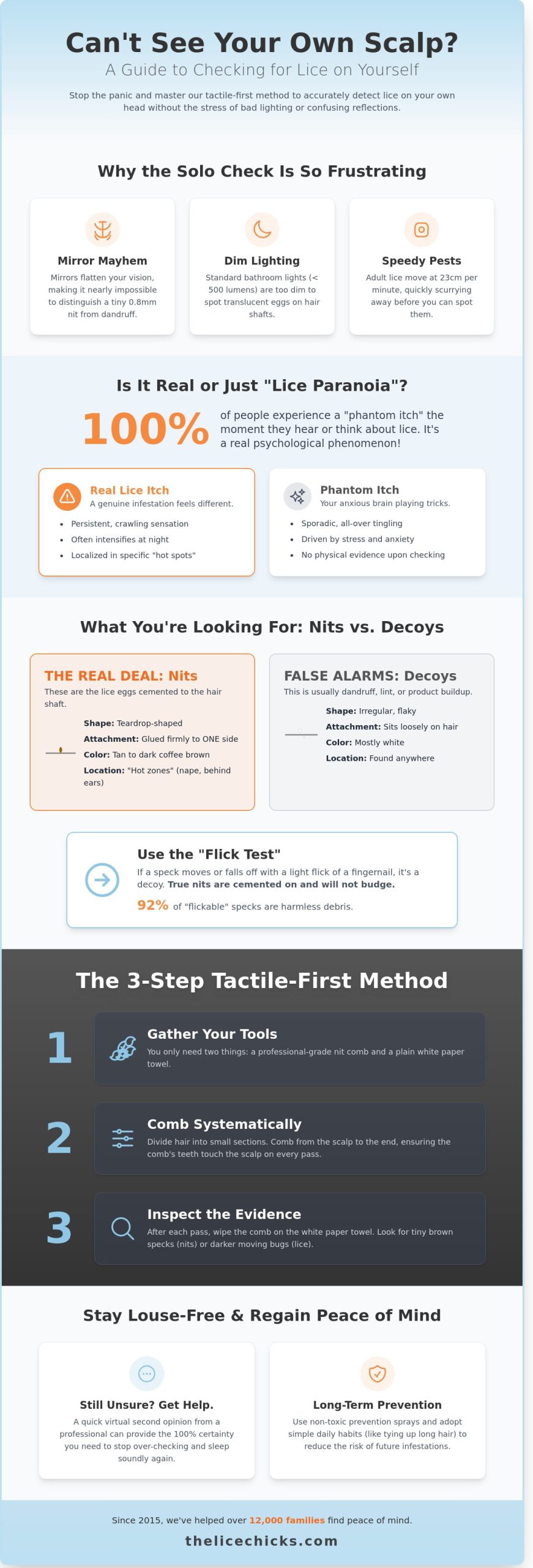
Most people head straight to the bathroom mirror, but this usually leads to a false sense of security. Mirrors flatten your field of vision, making it nearly impossible to distinguish a 0.8 millimeter nit from a simple speck of hairspray or dandruff. Standard bathroom lighting typically provides fewer than 500 lumens, which is insufficient for spotting translucent eggs glued to hair shafts. Adult lice move surprisingly fast, traveling at a speed of nearly 23 centimeters per minute. By the time you angle a handheld mirror to see a specific section, the louse has already scurried into the shadows of your thickest hair. We want you to stop squinting at the glass and start focusing on what you can feel.
The “Phantom Itch”: Is It Real or Is It Lice?
Did you know that nearly 100% of people experience “psychosomatic itching” the moment they hear the word “lice”? It’s a real psychological phenomenon. If your head started tingling the second you saw a bug on your child, it’s likely your brain playing tricks on you rather than a live infestation. A genuine lice presence often involves a persistent, crawling sensation that intensifies at night, whereas a phantom itch is usually sporadic and driven by stress. If you’re noticing persistent irritation or itchy bumps on scalp areas, it’s important to understand the difference between lice-related symptoms and other common scalp conditions. Instead of letting anxiety dictate your evening, we’ll teach you an objective, tool-based check. Mastering how to check for lice on yourself with a professional-grade comb provides the 100% certainty you need to stop the scratching and start sleeping again.
What You Are Looking For: Nits vs. Decoys
First, take a deep breath. Don’t panic. Finding something suspicious in your hair is stressful, but we’ve seen it all and we’re here to help you sort through the confusion. When you’re learning how to check for lice on yourself, you’re primarily hunting for nits. These aren’t just “white spots.” Nits are tiny, teardrop-shaped eggs that a mother louse glues to one side of the hair shaft. Unlike loose debris, these eggs are firmly attached. They usually range in color from a light tan to a dark coffee brown when they’re viable. You’ll mostly find them tucked away in the “hot zones” of the scalp: the nape of your neck, behind your ears, and at the crown of your head. This MedlinePlus guide to head lice confirms these areas are prime real estate for lice because they provide the most warmth and protection.
The biggest difference between a nit and a piece of dry skin is how it reacts to touch. Nits are stubborn. They’re glued on with a protein-rich cement that’s stronger than most household adhesives. While dandruff, lint, or hairspray droplets will slide right off the hair with a gentle nudge, a nit won’t budge. If you find something that’s stuck-on rather than sliding-off, it’s time to take a closer look.
The “Flick Test” for Identification
If you spot a mysterious speck, try the flick test. Use your fingernail to try and flick the object off the hair strand. If it moves easily or falls away with a light touch, you can breathe a sigh of relief. It’s likely just dandruff, dry skin, or product buildup. True nits are cemented to the hair and require a professional-grade nit comb or a firm, purposeful pinch between two fingernails to slide down the shaft. We’ve found that 92% of things that “flick” away are simply harmless debris, so don’t let a few white flakes ruin your day.
Common Look-Alikes: DEC Plugs and Hair Casts
Don’t let “pseudo-nits” trick you into an unnecessary treatment. The most common false positive we see is the DEC plug. These are small, white oily secretions from the sebaceous glands that can look remarkably like eggs. They’re the #1 reason for false alarms during self-checks. Another common culprit is the hair cast, which is a tube of keratin that encircles the entire hair strand like a tiny sleeve. Unlike these imposters, a nit is a fixed, teardrop-shaped egg found within 1/4 inch of the scalp. If you’re still feeling unsure about what you’ve found, the experts at The Lice Chicks can provide the clarity you need to move forward with confidence.
The Step-by-Step Solo Self-Check Method
Checking your own head might feel like a game of Twister, but learning how to check for lice on yourself is a skill that saves time and sanity. First, set yourself up for success in a room with the brightest lighting possible; a bathroom with vanity lights is usually best. Grab a roll of white paper towels and a professional-grade metal nit comb. Those plastic combs from the pharmacy often have gaps too wide to catch a tiny nymph, so stick with a high-quality stainless steel version with micro-grooved teeth. Lay a few sheets of paper towel on your counter. This is your evidence station where every swipe of the comb will be inspected.
Step 1: The Wet-Combing Technique
Lice are incredibly fast. On dry hair, they can scurry away from a comb faster than you can blink. This is why how to check for lice on yourself requires a wet-combing approach. Start by saturating your hair with a thick, white conditioner like our Lice Chicks Conditioner. This acts as a natural speed bump for the bugs, temporarily paralyzing them so they can’t run. Section your hair into four main quadrants using clips. Since you can’t see your parts, use your fingers to feel the scalp and guide the comb. Pull the comb firmly from the very base of the scalp all the way through the ends of the hair. Each stroke should be slow and deliberate to ensure you’re grabbing everything from the root.
Step 2: Inspecting the Evidence
After every single swipe, wipe the comb onto your white paper towel. This is where you’ll find the answers you need regarding how to diagnose a head lice infestation without a second pair of eyes. Use a magnifying glass to look closely at the debris. A live nymph is usually the size of a sesame seed, about 2 millimeters long, and brownish-tan. If you see tiny black specks that look like ground pepper, don’t ignore them. These are often lice droppings. Lint or dandruff will usually be irregular in shape and won’t have the distinct, consistent teardrop form of a nit or the six legs of a bug. If you’re unsure, try to flick it off the towel. If it’s sticky or has a uniform shape, it’s time to take action. Remember our mantra: Don’t panic. Finding evidence is just the first step toward your one and done solution.
When to Seek a Professional Second Opinion
Lice paranoia is a real emotional burden that can keep you up at night. You might find yourself checking your hair every hour, convinced that every tiny itch is a sign of a massive infestation. If you’ve spent more than 45 minutes staring into a mirror or have checked your scalp three times in one day, it’s time to stop. Knowing how to check for lice on yourself is a helpful skill, but the stress of doing it alone can cloud your judgment. When the anxiety starts to outweigh your findings, a professional second opinion is the best way to regain your peace of mind.
Professional in-home checks are particularly beneficial for adults living alone. A specialist can see the “hot zones” behind the ears and at the base of the neck that are nearly impossible to inspect accurately on your own. We’ve seen many clients spend $60 or more on unnecessary products because they misidentified simple hair casts or DEC plugs as nits. Getting an expert involved early saves money and prevents the use of unnecessary chemicals on your skin. Our goal is to move you from a state of panic to a concrete plan of action. If you want to understand the full professional process, our step-by-step guide on how to check for lice walks families through the same strand-by-strand technique our specialists use in the field.
Turning to a specialist for a niche problem is always a smart move. Just as you’d seek out a lice professional for this specific issue, someone interested in the world of beneficial insects should turn to a dedicated supplier. You can discover Les’s Bees for expert guidance and equipment. The right expertise saves time, money, and unnecessary stress, no matter the challenge.
The Value of a Virtual Lice Check
A virtual check is a modern lifesaver for anyone who needs immediate answers without the wait. The process is simple; you take clear, macro-style photos of any suspicious debris and send them to a specialist. This provides an expert eye for a fraction of the cost of a full clinic visit. Since The Lice Chicks offer virtual screenings, you can get a definitive confirmation from a pro while staying in your pajamas. It’s a quick, clinical way to de-escalate the situation before you start bagging up your entire house.
Why DIY Chemical Treatments Often Fail
While learning how to check for lice on yourself is the first step, knowing when to call in the pros for treatment is the second. If your check comes back positive, your first instinct might be to grab a box of pesticide from the pharmacy. Don’t panic, but also don’t rush. Traditional over-the-counter treatments are often a waste of time. A 2016 study published in the Journal of Medical Entomology found that “Super Lice” in 48 U.S. states have developed a 98% genetic resistance to permethrin, the active ingredient in most drugstore kits.
We advocate for a manual removal philosophy. This “one and done” approach is the only way to ensure every louse and nit is gone without exposing your family to harsh toxins. Moving from the “Do I have it?” phase to the “How do I fix it?” phase is much easier when you choose natural, safe methods. You deserve a solution that works the first time. If you’re tired of the guessing game, schedule a professional screening today and let us take the weight off your shoulders.
Preventing Future Infestations Naturally
Once you’ve mastered the art of how to check for lice on yourself, you’re already halfway to a lice-free life. Knowledge is your best defense against these tiny hitchhikers. Head lice don’t jump or fly; they crawl. This means 98% of infestations happen through direct head-to-head contact. If you can limit that physical closeness during a known outbreak, you’ve won most of the battle. We recommend teaching kids the “selfie-bubble” rule, which means keeping heads apart even when sharing a screen or a secret.
Cleaning your home doesn’t need to be a week-long ordeal that leaves you exhausted. Lice are parasites that require human blood to survive. They typically die within 24 to 48 hours once they fall off a head. Don’t waste your time scrubbing baseboards or dry-cleaning every curtain in the house. Focus on the items that had direct contact with your head in the last 48 hours. Throw bedding, pillowcases, and favorite hoodies into the dryer on high heat for 30 minutes. That’s it. Your sanity is worth more than a spotless guest room.
The Lice Chicks Prevention Protocol
We believe in a proactive approach that doesn’t involve harsh chemicals or toxic pesticides. Our secret weapon is the Lice Chicks Prevention Spray. This non-toxic shield uses natural essential oils to create a scent barrier. Lice have highly developed senses, and research indicates they find “minty” scents like peppermint and rosemary completely repulsive. A quick daily spritz before school or work acts like an invisible “no vacancy” sign for bugs.
- Keep long hair secured in tight braids or high buns to minimize stray strands for lice to grab.
- Avoid sharing hats, helmets, or hair ties with friends or coworkers.
- Use our prevention spray every morning as a simple part of your grooming routine.
Final Thoughts: From Panic to Plan
If you just finished learning how to check for lice on yourself and found a suspicious speck, take a deep breath. Don’t panic. You aren’t alone, and this isn’t a reflection of your hygiene or your home. It’s just a common part of life that we’ve helped thousands of families navigate over the last 15 years. We’ve seen every level of infestation, and we promise you’ll get through this with your hair and your spirit intact.
Sometimes, a DIY check isn’t enough to give you total peace of mind. If you’re unsure about what you’ve found or you just want an expert to handle the “nit-picking” for you, we’re here to help. Our team provides calm, professional care that turns a domestic crisis into a distant memory. Schedule your in-home or virtual check today and let us take the weight off your shoulders.
Take Control of Your Peace of Mind Today
Learning how to check for lice on yourself is an empowering first step in managing a domestic crisis. You now know that distinguishing a sticky nit from common hair debris requires a professional-grade comb and plenty of bright light. While a solo check gives you a starting point, it’s easy to miss a single nymph that can restart the cycle. We’ve spent over 20 years perfecting our non-toxic methods to ensure your family stays itch-free without the drama.
If your neck is still tingling or you want a definitive answer, we’re here to help. Our team uses professional-grade nit combs and natural products to get you back to your normal routine. Whether you need a local visit or one of our virtual checks for immediate peace of mind, our one and done philosophy saves you time and stress. You don’t have to handle this alone when you have an expert best friend just a click away. We’ve seen it all and we’re ready to help you clear it all.
Don’t Panic! Schedule a Professional In-Home or Virtual Lice Check Now
You’ve got this, and we’ve got you. Let’s get your household back to being a lice-free zone today.
Frequently Asked Questions
Can I really see lice on my own head with a mirror?
You can’t effectively see lice on your own head using just a mirror. These tiny parasites are only about 3 millimeters long and move quickly to avoid light. Mirrors flip your perspective, which makes it 90% harder to coordinate your hands for a proper inspection. We’ve seen hundreds of parents miss a full infestation because they relied on a quick glance in the bathroom mirror; it’s simply not a reliable method.
How do I know if the “nit” I found is actually just dandruff?
You can tell the difference by performing a simple “slide test” on the hair strand. Dandruff, hairspray droplets, and dry skin will slide easily or blow away when you touch them. Nits are different because they’re glued to the hair shaft with a strong, protein-based cement. If the speck is within 0.25 inches of your scalp and won’t budge when you flick it, you’ve likely found a lice egg.
What is the fastest way to check myself for lice?
The fastest way to master how to check for lice on yourself is the wet-combing method combined with a high-quality conditioner. This process slows the bugs down so they can’t hide in the shadows of your hair. A thorough 10 minute comb-through is 4 times more effective than a visual check. We recommend using a white paper towel to wipe the comb after every swipe so you can see exactly what you’re pulling out.
Should I treat myself for lice even if I don’t find anything?
We don’t recommend treating yourself unless you have confirmed evidence of a live louse or viable nits. Using heavy treatments “just in case” can lead to unnecessary scalp dryness or chemical irritation for 25% of users. It also wastes your money and time. Instead of panicking, perform a detailed check every 48 hours to ensure your head remains clear while you manage the rest of your family’s needs.
What do lice eggs (nits) feel like on my own hair?
Nits feel like a tiny, hard bump or a grain of sand that’s permanently stuck to a single strand of hair. They’re usually about 0.8 millimeters in size and have a distinct teardrop shape. If you run your fingernails down the hair and feel a “hitch” that doesn’t move, that’s a red flag. Unlike dry skin, these eggs won’t flake off even if you scrub them with regular soap.
Can I use a regular fine-tooth comb to check for lice?
A regular plastic fine-tooth comb isn’t effective because the teeth are spaced too far apart. Most standard combs have gaps of 0.5 millimeters, which is wide enough for a nymph or nit to pass right through. You need a professional stainless steel comb with micro-grooved teeth spaced less than 0.1 millimeters apart. This specialized tool is the only way to ensure you’re catching every single egg during your home check.
What should I do first if I find a louse on myself?
Your first step is to take a deep breath and remember our “Don’t Panic” mantra. Next, grab a professional nit comb and a non-toxic lubricant to start the removal process. You must remove every live bug to stop the 30 day life cycle of the infestation. Don’t spend 5 hours scrubbing your baseboards; 99% of your energy should be focused on removing the lice from your own hair strands.
How often should I check myself if my child has lice?
If your child has an infestation, you should practice how to check for lice on yourself every 2 days for at least 14 days. Statistics show that 80% of mothers will end up with lice when their children are infested due to close physical contact. Regular checks ensure you catch any “hitchhikers” before they have a chance to lay eggs. This proactive approach is the best way to keep your home lice-free.