
How to Check for Lice: A Step-by-Step Guide for Families in NYC, Long Island, and Beyond

Last Monday, a mom in Brooklyn spent three hours under a bright desk lamp, squinting at her son’s scalp and feeling her heart sink with every tiny white speck. If you’ve found yourself in a similar spot, wondering how to check for lice without losing your mind, please take a deep breath. You aren’t alone, and this situation is much more common than you think.
We know that feeling of instant panic and the overwhelming urge to scrub every inch of your home. It’s completely normal to feel frustrated by confusing online photos or worried about using harsh chemicals on your children. You deserve a clear answer and a plan that actually works without the extra stress.
We’re going to teach you the professional Shepherd Method for detecting lice at home. This is the same meticulous, strand by strand technique we’ve used to help over 5,000 families across Long Island and NYC find peace of mind. It’s safe, non toxic, and incredibly effective.
In this guide, we’ll show you exactly how to tell the difference between nits and simple hair debris. You’ll get a step by step walkthrough of the process and a reliable action plan to keep your family safe and lice free.
Key Takeaways
- Normalize the situation and learn why head lice can happen to any family, whether you’re in a Brooklyn brownstone or a Scarsdale estate.
- Discover the essential tools you’ll need and the professional “wet check” steps for how to check for lice without the stress.
- Learn the simple “Flick Test” to easily tell the difference between a sticky nit and harmless dandruff or hair debris.
- Get a calm action plan for what to do if you find a bug, focusing on the “high-touch” items that actually need cleaning.
- Find out why the “Shepherd Method” of sectioning hair is the gold standard for making sure no strand is left behind.
Why Checking for Lice Feels So Overwhelming (And Why It’s Normal)
If you just found a bug or got a dreaded text from the school nurse, take a deep breath. Your heart might be racing, but we want you to know one thing right away: Don’t Panic. At The Lice Chicks, we’ve helped thousands of families through this exact moment. Whether you are living in a Brooklyn brownstone or a Scarsdale estate, lice are a common part of life. They don’t care about your zip code or how often you vacuum your rugs.
Finding out your child has a head lice infestation often feels like a parenting fail, but it isn’t. These tiny travelers are a nuisance, not a health hazard. They don’t spread disease, and they definitely aren’t a sign of poor hygiene. In fact, lice actually prefer clean hair because it’s easier to attach their eggs to the strands.
Learning how to check for lice properly is the first step toward peace of mind. Most parents start with a quick glance behind the ears, but a real check is much more thorough. It involves a systematic, strand-by-strand inspection of the entire scalp. Early detection is your best friend. Catching it now means you can stop a full-blown household breakout before it starts.
The Reality of School and Camp Outbreaks
Local schools in NYC and Long Island usually see a major spike in cases during September and again in April. These “peak seasons” happen because children return from breaks where they’ve been in close contact. These hitchhikers spread through head-to-head contact at summer camps in Westchester or sleepovers in Orlando. If your child is leaning in to look at a friend’s tablet, that is all the time a louse needs to move houses.
We recommend doing regular checks even if you haven’t seen a “lice alert” email yet. Being proactive is much easier than dealing with a surprise on a Sunday night. You can find more helpful tips on our lice facts page to stay ahead of the game. Regular screenings keep your home a bug-free zone.
Why Visual Checks Often Fail
Many parents struggle with how to check for lice because these bugs are experts at hide-and-seek. Lice are incredibly fast and move away from light the second you part the hair. If you are just looking at the surface, you will likely miss them. They prefer the dark, warm spots near the nape of the neck and behind the ears.
Nits are even harder to spot than the bugs themselves. They are often mistaken for dry skin, dandruff, or leftover hairspray. Nits are teardrop-shaped eggs glued to the hair shaft. Unlike dandruff, you cannot blow or flick them away. They are stuck tight, which is why manual removal is the only way to ensure they are gone for good. Our team uses the Shepherd Method to ensure every single egg is found, providing a 100% lice-free guarantee for your family.
The Pro-Mama Toolkit: What You Need for an Accurate Lice Check
First things first: take a deep breath. You’ve got this, and we’re here to help you get through it without the stress. Before you start learning how to check for lice, you need the right tools in your corner. Think of this as your pro-mama toolkit. You wouldn’t try to fix a leaky pipe with a toothpick, so don’t try to find tiny nits with a standard hairbrush.
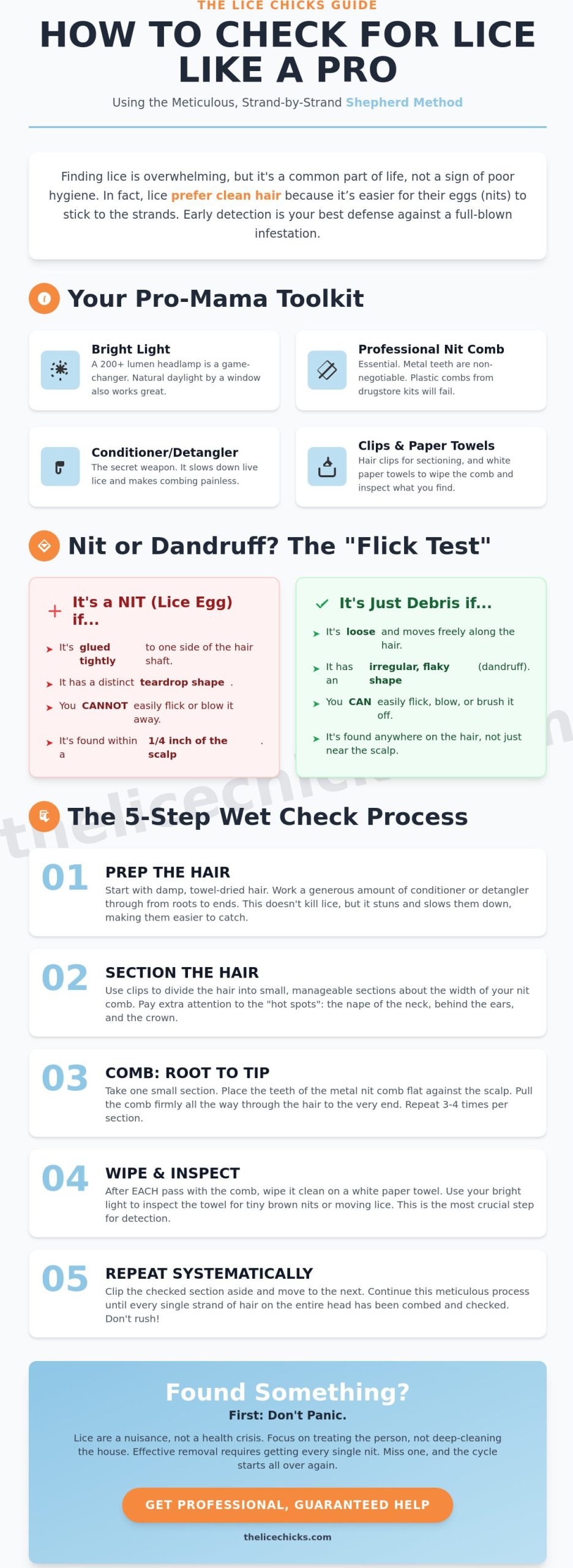
You need two things above all else: incredible lighting and a high-quality comb. A high-lumen headlamp, ideally 200 lumens or more, is a total game-changer because it keeps your hands free. If you don’t have one, find the brightest window in your house during peak daylight hours. Natural light is often the best way to spot the shimmer of a nit glued to a hair strand.
Slathering the hair in a non-toxic detangler or conditioner is a secret weapon. It slows down those speedy live lice so they can’t scurry away while you’re looking. For a detailed step-by-step guide to diagnosis, experts often recommend this wet-combing method to ensure nothing is missed. It makes the hair manageable and keeps your child comfortable throughout the process.
Why a Professional Nit Comb is Non-Negotiable
Those little plastic combs that come in drugstore kits are often the reason parents struggle for weeks. The teeth are usually too flexible and spaced too far apart. They glide right over the tiniest nits, especially those pesky “super lice” eggs that are glued tight to the hair shaft. These plastic tools simply aren’t strong enough to scrape away the protein glue that holds an egg in place.
The industry standard is a Professional Nit Comb with micro-grooved, stainless steel teeth. These teeth are spaced so closely that even the smallest nymph can’t slip through. It’s the difference between a quick fix and a job done right the first time. Investing in a metal comb saves you from the “it’s back” cycle that happens when small eggs are left behind.
Setting the Stage for Success
Knowing how to check for lice properly starts with a calm environment. Timing is everything. Try to check when your child is relaxed, perhaps after a snack or while they’re watching a favorite movie. This “calm zone” keeps them still, which is essential for a thorough inspection. Sit your child on a low stool while you stand or sit behind them to get a better bird’s-eye view of the crown.
Keep a stack of white paper towels nearby. After every swipe of the hair, wipe the comb onto the towel. This makes it much easier to see what you’ve pulled out against a clean background. If you see tiny, brownish, teardrop-shaped specks that don’t easily brush off the towel, you’ve likely found a nit. If the process feels overwhelming or you aren’t sure what you’re seeing, we’re here to help make this as stress-free as possible with our professional in-home checks.
Step-by-Step: How to Check for Lice Like a Professional
Don’t panic if you’ve never done a head check before. We’re here to help you through it. Learning how to check for lice is a skill every parent can master with a little patience and the right tools. First, always start with a wet check. Damp hair is much easier to navigate than dry hair. When hair is dry, lice can move up to 23 centimeters per minute, making them incredibly fast at hiding from your light.
Wetting the hair or adding a bit of conditioner slows these tiny bugs down. It also prevents static, which keeps the hair from flying around while you work. Once the hair is damp, use the “divide and conquer” method. Use clips to section the hair into four main quadrants. You’ll want to work in very small, one-inch sections to ensure no strand is missed. This methodical approach is exactly how we ensure a thorough inspection every time.
As you work through each section, use a professional metal nit comb for a 4-way comb-through. You must comb up from the neck, down from the crown, and from both the left and right sides. This technique ensures you catch nits that might be glued to different sides of the hair shaft. Focus your energy on the “hot zones” where lice love to hide. These are the warm areas behind the ears and at the nape of the neck. We find about 90% of infestations start in these specific spots.
The Shepherd Method: The Gold Standard
At our clinics, The Lice Chicks technicians use the Shepherd Method for every client. This is a meticulous, strand-by-strand approach that leaves nothing to chance. While many people try chemical shampoos or heat devices, those methods often fail to kill every egg. Manual removal is the only way to guarantee 100% eradication of an infestation. It’s a labor of love that ensures your child is truly lice-free before they head back to school.
What to Look for on the Comb
As you comb, wipe your tool on a white paper towel after every single swipe. You’re looking for live nymphs, which are baby lice, or adult lice that are about the size of a sesame seed. You’ll also see nits, which are tiny, teardrop-shaped eggs glued to the side of the hair. If you find a brownish nit and squeeze it between your fingernails, you might hear or feel a tiny “pop.” This sound indicates the egg is viable. If you end up with a lice egg on your finger and aren’t sure what to do next, we have a complete guide walking you through every step. You can find more details on what lice eggs look like to help you distinguish them from common hair debris like dandruff or DEC plugs.
Lice, Nits, or Just Dandruff? How to Tell the Difference
Identifying head lice can feel like a high-stakes guessing game. You’re staring at tiny specks in your child’s hair, wondering if they’re cause for alarm or just a bit of dry skin. Don’t panic; we’ve seen it all, and we’re here to help you clear up the confusion.
One of the most reliable ways to tell the difference is the “Flick Test.” Nits are attached to the hair with a strong, glue-like substance produced by the mother louse. If you can blow the speck away or easily brush it off with your finger, it isn’t a nit. Nits won’t budge without a fight.
When you’re figuring out how to check for lice, keep an eye on positioning. Nits are teardrop-shaped and always glued to one side of the hair shaft. You’ll usually find them within 1/4 inch of the scalp where the warmth helps them stay cozy. If you find a speck three inches down the hair strand, it’s likely an old, hatched shell or just debris.
Color is another major clue for parents. Live nits are generally brownish or tan, blending in with many hair colors. Once they hatch, the remaining casing looks white or clear. This is often why people mistake them for dandruff or hair product residue.
Common ‘Lice Look-Alikes’
Many families in Long Island or NYC mistake sand or hairspray for an infestation. Hairspray creates tiny, round droplets that look like nits but often circle the entire hair strand. Sand is common after a weekend at the beach, but it’s gritty and falls out easily when the hair is dry.
Dandruff and dry scalp are the most frequent culprits for false alarms. Dandruff is flaky, irregular in shape, and moves freely when touched. You might also see “DEC” (desiccated epithelial cells) or hair casts, which are bits of skin that slide up and down the hair like a bead on a string. If you’re seeing itchy bumps on the scalp, it’s definitely time for a more thorough inspection.
The ‘Super Lice’ Myth vs. Reality
You might have heard scary stories about “super lice” taking over schools. It’s a bit of a misnomer; these aren’t giant or aggressive bugs. They’re simply lice that have developed a genetic resistance to the pesticides found in common over-the-counter treatments.
A 2016 study published in the Journal of Medical Entomology found that lice in 48 states have developed resistance to pyrethroids. This is why many parents feel frustrated after repeated chemical treatments fail. The bugs aren’t invincible; they just don’t care about the old-school toxins anymore.
Our team bypasses this problem entirely by using the Shepherd Method. This manual, strand-by-strand approach ensures every nit is removed by hand. Because we don’t rely on chemicals, the “super lice” resistance doesn’t matter. We focus on physical removal, which is the only way to guarantee the hair is truly clear.
If you’re tired of second-guessing yourself while learning how to check for lice, we can take the weight off your shoulders. Contact us today to have a professional handle the inspection and treatment for you.
What to Do If You Find Something (Hint: Don’t Panic)
So, you followed the steps on how to check for lice and found a tiny stowaway. Take a deep breath. You aren’t a bad parent, and your house isn’t dirty. Lice actually prefer clean hair because it’s easier to attach their eggs. Your first step is to treat the person with the infestation, then check every other head in the house immediately.
Cleaning doesn’t require you to steam the carpets or scrub the baseboards. Lice are parasites that need a human host to survive. They typically die within 24 to 48 hours if they fall off a head. Focus your energy on “high-touch” items. Toss pillowcases, favorite hoodies, and winter hats in a hot dryer for 30 minutes. That’s enough to finish them off without burning the house down. If you’ve just pulled a suspected lice egg off the hair and found it on your finger, don’t panic — our step-by-step guide walks you through exactly what to do next.
Choosing In-Home Lice Removal is the fastest way to return to your normal routine. We come to you, which keeps your business private and your kids comfortable. Our experts use the Shepherd Method, a meticulous strand-by-strand manual removal process. This ensures we get every single nit the first time, so you don’t have to spend your weekend hovering over a magnifying glass.
When to Call in the Professionals
If you’ve already tried a DIY removal and see live lice crawling 48 hours after treatment, the attempt has failed. Many over-the-counter kits are now less than 25% effective because lice have developed resistance to the chemicals. This is a common frustration for parents who want a quick fix but end up stuck in a cycle of re-infestation.
Not sure if you’re looking at a nit or just a bit of glitter? A Virtual Lice Check provides a quick, expert second opinion without leaving your couch. Our “one and done” philosophy has saved families in Baltimore, Newark, and Greenwich from weeks of unnecessary stress. We provide the clinical authority you need with the empathy you deserve during a domestic crisis.
Prevention: Staying Lice-Free in the Future
Lice have a very sophisticated sense of smell, and they find the scent of peppermint absolutely repulsive. We call it the “Peppermint Shield.” Using our Prevention Spray daily creates an invisible barrier that makes your child’s head an unattractive landing zone. It’s a non-toxic, simple step that offers massive peace of mind every morning before the school bus arrives.
Simple habit changes make a huge difference too. Implement a “hair up” rule for school or camp; high ponytails and tight braids leave fewer loose strands for lice to grab. Remind your kids that sharing is usually great, but brushes and hats are off-limits. For more detailed tips on keeping the bugs away, read our Lice Prevention Spray: A Parent’s Guide.
You’ve got this, and you’re doing a great job. Head lice are just a temporary hiccup in the life of a busy family. We are here to help you handle it quickly, safely, and with a smile. Once we’ve cleared the hair, you can go back to being the calm, organized parent you really are.
Ready to Put the Lice Panic Behind You?
Learning how to check for lice is a major win for any parent. By using a professional grade comb and the strand by strand technique, you’ve taken the first step toward an itch free home. Remember that nits are stubborn and stick to the hair like glue, while dandruff usually just brushes away with a light touch.
If the process still feels daunting, remember that you don’t have to be the expert. Since 2005, we’ve helped thousands of families across NYC and Long Island handle infestations with our non-toxic, pesticide free Shepherd Method. We focus on being thorough so you can get back to your normal routine without the lingering stress of a missed nit.
We stand by our work with a 100% Lice-Free Guarantee, giving you the confidence that the job is done right the first time. Feeling overwhelmed? Let the experts handle it—book your in-home lice check today! You’re doing a great job, and we’re here to help you cross the finish line with a smile.
Frequently Asked Questions
How can I tell the difference between lice and dandruff?
You can tell the difference by trying to flick the speck off the hair with your finger. Dandruff is flaky and moves easily, but nits are glued to the hair shaft with a very strong protein. In fact, about 90 percent of what parents find during a home check is actually dandruff or hair debris. If it doesn’t budge when you touch it, you are likely looking at a nit.
Can you see lice eggs with the naked eye?
Yes, you can see lice eggs with the naked eye, though they are only about 0.8 millimeters long. They look like tiny, brownish tan teardrops attached to just one side of the hair strand. While they are very small, they have a distinct oval shape that doesn’t look like a flat skin flake. Using a bright 100 watt bulb or natural sunlight makes them much easier to spot.
What is the fastest way to check my child for lice?
The fastest and most accurate method for how to check for lice is the wet comb technique. Apply a white conditioner to damp hair and use a professional grade metal nit comb to swipe through sections. This slows the lice down so they cannot scurry away from your light. We recommend 5 to 10 swipes in high risk areas like the nape of the neck to get an immediate answer.
Where do lice usually hide on the head?
Lice prefer the warmest parts of the head, specifically behind the ears and at the nape of the neck. These hot spots provide the perfect temperature for eggs to incubate. When you perform a check, start in these two areas first. About 85 percent of infestations are identified by looking closely at these specific zones before checking the rest of the scalp.
How do I check for lice on myself if I’m alone?
Checking yourself is tricky, but you can do it using a large wall mirror and a handheld mirror to see the back of your head. Focus on the hair within 1 inch of the scalp where lice live. If you feel overwhelmed, remember that we provide in home checks throughout NYC and Long Island. It is often faster to have a professional eye look for you to ensure nothing is missed.
What should I do if I find one live louse but no nits?
If you find one live louse, you should treat the head immediately because a single female can lay up to 10 eggs per day. It is possible the nits are just too small to see yet or were laid in a spot you haven’t checked. Don’t wait for a full colony to form. Finding one bug is enough evidence to start our non toxic, manual removal process.
Is an itchy scalp always a sign of lice?
An itchy scalp is not always a sign of lice; only about 50 percent of people are actually allergic to lice saliva. Some children have a full infestation and never feel an itch at all. Itching can also be caused by dry skin, new shampoo, or even nerves. Always look for physical evidence like live bugs or nits before you start a treatment plan.
Can I get a professional lice check in my own home?
You can absolutely get a professional lice check in the comfort of your own home. We bring our expert “Chicks” directly to your door in NYC and Long Island to provide a stress free screening for the whole family. This saves you the 3 to 4 hours of frustration spent squinting under bathroom lights. We use the Shepherd Method to ensure a 100 percent lice free result.